What is Private Browsing? Myths, Limits & How to Stay Safe
Learn what is private browsing, what it can't protect you from and how to combine it with VPNs and other tools for true online privacy and security.
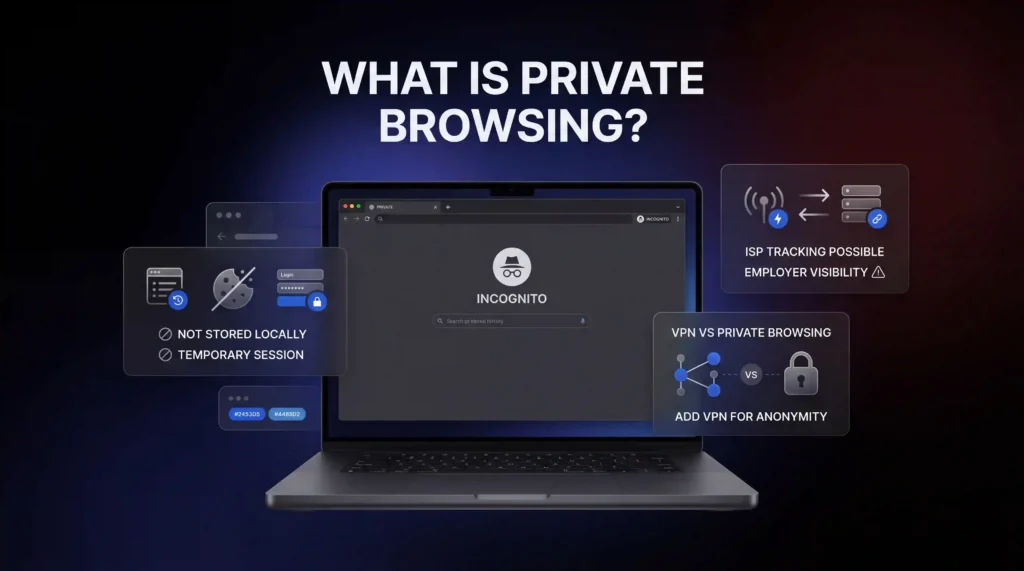
Sometimes, you want to search online without leaving a trace. You may be planning a gift or checking something personal. In these cases, many people turn to private browsing. It helps keep your local device free from stored history and cookies, so others can’t easily see what you looked at.
When you open a private web browsing mode, like “Incognito” in Chrome or “InPrivate” in Edge, the browser creates a temporary session. It won’t save visited pages, form entries, or sign-ins once you close the window.
This makes it useful on shared computers or when you don’t want targeted ads following you around. But it’s not the same as anonymous internet browsing. Your internet provider, employer, or the websites you visit can still track activity.
You’ll also see how it compares to VPN vs private browsing, and how adding a VPN for private browsing can improve safety. By the end, you’ll know precisely when to rely on private internet browsing, and when it’s better to add extra protection.
What is Private Browsing?
Private browsing isn’t as “private” as most people assume. It’s a browser feature designed to wipe local traces of your session once you close the window. Your search history, login details and cookies are deleted from the device, making it appear as though you never visited those sites.
Browsers package it under different names; Chrome calls it Incognito, Firefox labels it Private Window, Safari uses Private Browsing, and Microsoft Edge has InPrivate. The names change, but the purpose is the same: short-term privacy on your own device.
This can be handy for shopping without price tracking, signing into multiple accounts at once, or using a public computer without leaving digital footprints. It’s why many people link it with private web browsing or private internet browsing.
But here’s the catch: Private browsing doesn’t mask your identity online. Your IP address remains visible and your activity can still be logged by websites, network admins, or ISPs. If you’re aiming for anonymous internet browsing, you’ll need extra tools like a VPN for private browsing to actually conceal your connection and location.
Pairing NordVPN with your private browsing window gives you what neither tool alone delivers: local cleanup and real online anonymity.
Now 68% off.
 Nordvpn
What Does Private Browsing Do?
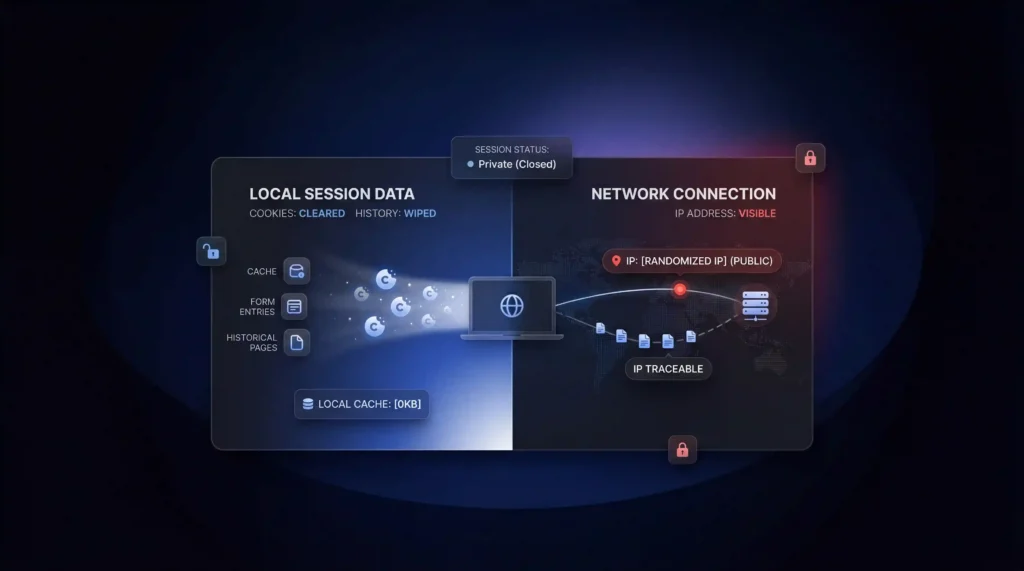
Private browsing is often misunderstood. People think it makes them completely invisible online, but in reality, it only controls what your device remembers locally. Think of it as pressing pause on your browser’s memory; once you close the window, the record of that session disappears from your computer or phone.
Here’s a closer look at what private browsing mode can actually handle:
Erases Your Local Browsing Footprints
When you open a private window, the browser skips saving history, cache, and form entries. That means no one scrolling through your device later will see what you searched for or which pages you visited.
This makes private web browsing especially useful if you’re shopping for a surprise gift, using a work laptop for personal searches, or browsing on a library computer.
Clears Temporary Cookies but Leaves Your IP Exposed
Cookies are the main way websites track you. In online private browsing, those cookies get deleted once you close the window, so sites don’t keep storing your data on your device.
But it doesn’t stop websites from recognizing you during that session, and it definitely doesn’t hide your IP address. So while your device is cleaner, your activity can still be linked back to you on the internet.
Protects Privacy on Shared or Public Devices
If you share your computer with family, coworkers, or roommates, Private Mode ensures that your searches, logins, and downloads don’t appear in your history.
For students using campus computers or travelers in internet cafés, this layer of private internet browsing keeps personal activity from being exposed to the next person at the keyboard.
Runs Parallel Accounts Without Interference
One of the most practical but overlooked uses of private mode is managing multiple logins. You can sign into your work account in a regular window and your personal account in a private one; no need to log out and back in.
Social platforms, email services and banking sites all support this, which makes private browsing a handy multitasking tool.
Cuts Down on Some Tracking but Not All
Advertisers rely heavily on cookies to follow you around the web. Since private browsing wipes those cookies when you exit, targeted ads become less accurate. However, ad networks employ additional tactics, including device fingerprinting, IP tracking, and login data.
So while private mode gives you a little breathing room, it’s not true anonymous internet browsing. To hide your location and encrypt your traffic, a VPN for private browsing is still necessary.
What Gets Wiped in Each Browser?
Private mode isn’t identical across browsers. Here’s what actually gets cleared when you close a session:
- Google Chrome (Incognito): Browsing history, cached files, site data, and form entries. Downloads and bookmarks stay.
- Mozilla Firefox (Private Web Browsing): History, searches, form entries, cookies, and temporary files. Downloads and bookmarks stay.
- Safari (Private Window): History, AutoFill data, cookies, and temporary cache. Downloads and bookmarks remain.
- Microsoft Edge (InPrivate): Browsing history, cached files, form entries, and cookies. Downloads and favorites remain.
What Private Browsing Can’t Do?

Private Web browsing provides local privacy, but it leaves significant gaps in your online security. Many readers assume it’s a shield for everything, but that’s far from reality.
Here’s what private browsing mode still cannot do:
Don’t Hide Your IP
Private browsing hides your browsing history on your device, but your IP address remains constantly exposed. That number ties back to your location and internet connection. Websites, ad networks, and even streaming services use it to track or restrict access.
If you’re not sure why that matters, here’s exactly what someone can do with your IP address. If you want real anonymous internet browsing, private mode isn’t enough; you’d need a VPN for private browsing, actually, to mask your connection.
Doesn’t Beat ISP/Employer/School Logging
Whether it’s your workplace, university, or internet service provider, the network itself can still record everything you load. Private internet browsing creates a blank space on your laptop or phone, but the server logs on the other side still knows what you did.
That’s why employers can detect visits to social media or streaming sites even if you’re in Incognito.
Doesn’t Secure Public Wi-Fi
On open Wi-Fi, your traffic is often transmitted in an unencrypted format. Anyone with basic tools can monitor it. Private mode doesn’t fix that; it just skips saving your activity locally.
So while your roommate won’t see your searches on your laptop, someone sitting at the same café could still snoop on your browsing. Only encrypted tools, like a private browsing VPN, can protect data on unsafe networks.
Doesn’t Stop Fingerprinting or Login-Based Tracking
Cookies are temporary in private windows, but companies now use fingerprinting, device IDs, and login data to follow you. Private browsing wipes the basics but not these more advanced methods.
That’s why targeted ads can still “follow” you even after a private session. Real online private browsing requires blocking or masking these identifiers, something private mode simply doesn’t handle.
Doesn’t Block Malware or Phishing
Private windows aren’t a security barrier. If you land on a phishing site, download malware, or type credentials into a fake form, private mode won’t save you. It doesn’t scan files, block dangerous pages, or stop spyware.
In that sense, private browsing is privacy-focused, rather than security-focused, a distinction that most people overlook.
Common Myths About Private Browsing
Here are some common myths about private browsing that you might have heard around:
Myth 1: Private Mode Hides Your Address
Some people think that an unrecognizable address hides your internet address. This is not true. It does not hide your IP address. Your IP address identifies your device on the internet.
Websites, your internet provider, and others can still see your IP address even when you use private mode.
Myth 2: Private Mode Blocks Viruses
Private browsing does not block viruses or other malware. Some think it protects against these threats, but that is false. Viruses and malware can still infect your device when browsing privately.
You must be very careful about websites and downloads, even in private mode.
Myth 3: Private Mode Stops Tracking
This myth says private browsing prevents websites from tracking you. But that is incorrect. Websites can still track your activities in other ways.
Companies use trackers and data fingerprinting to monitor your online behavior. Private mode does not block or stop these tracking methods.
Myth 4: It Deletes All History
Some assume that unrecognizable deletes all your history and data. This is a myth. It only deletes for that one private session. Any previous regular browsing history and data remain on your device.
Only the private session information gets cleared when you close it.
Myth 5: It Allows Illegal Activities
Private mode does not make illegal activities okay or untraceable. This is a very dangerous myth to believe. Your internet provider and authorities can still monitor your traffic. They can see and trace any illegal online activities you do, even in private browsing.
Private mode does not create an invisibility cloak for crimes. All your actions can potentially be tracked and linked to your real identity.
Best Practices for Private Browsing on Shared Computers
Keeping your activity private on a shared computer goes beyond opening a private browsing window. Private browsing mode does hide your history from casual checks, but without extra precautions, traces of your online activity can still linger in downloads, synced accounts, or the network itself.
Below are the best practices that make private internet browsing more effective and safer when multiple people use the same device:
Treat Downloads Like Loose Paper
Private browsing mode doesn’t erase files you download. If you grab a PDF, photo, or receipt during private web browsing, it stays on the shared computer until someone deletes it.
Imagine it like loose paper lying around; if you don’t file it away or shred it, someone else will see it. The best practice is to save private downloads on a removable USB drive, an encrypted folder, or to delete them right after use.
Wipe the Invisible Clipboard
Many users never think about the clipboard. But when you copy text, a password, or a sensitive URL while in private browsing, it remains available to the next user until it’s replaced.
Clearing the clipboard after online private browsing is just as important as closing the window. On Windows, you can use Windows Key + V to manage clipboard history; on macOS, a simple restart flushes it out.
Create “Mini Accounts” Within the Browser
Most modern browsers allow users to create profiles, each with its own bookmarks, cookies, and saved logins. Think of them like lockers at a gym, each user keeps their belongings separate and distinct.
Setting up your own browser profile is a step beyond private internet browsing: it prevents crossover between accounts and ensures your browsing history doesn’t mix with someone else’s.
Use Private Browsing With a Network Shield
Private browsing hides your history locally, but it doesn’t prevent tracking at the network level. Anyone managing the Wi-Fi, such as a workplace administrator or your internet provider, can still track your location.
This is where a VPN for private browsing comes in. A VPN encrypts your traffic and hides your IP address, covering the gap that private browsing mode leaves open. Even a free VPN for private browsing is stronger than relying only on incognito mode.
Don’t Let Sync Give You Away
If your browser is logged into Chrome Sync, iCloud, or Firefox Sync, private browsing won’t save you; visited sites or bookmarks could sync straight back to your phone or laptop. Before starting a session on a shared device, pause sync.
This ensures your browsing stays contained within that session instead of leaving digital fingerprints across your devices.
Always Close the Door Behind You
Private browsing works like a temporary room: it only clears itself when you lock the door behind you. If you leave one private tab open, your browsing session is still “alive,” meaning someone else could continue where you stopped.
The best practice is simple: close all tabs and windows before leaving the computer.
How to Enable Private Browsing Across Popular Browsers?
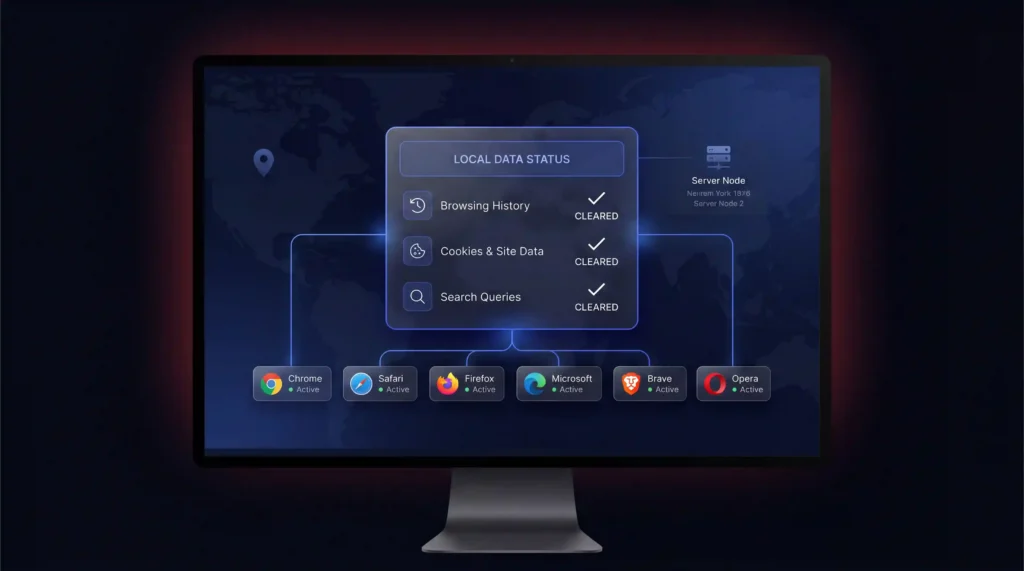
Private browsing isn’t just a button you switch on; it’s a way of keeping your online activity off your device history. When you open a Chrome Incognito tab or launch an Edge InPrivate session, the browser creates a temporary space where your searches, cookies, and visited pages vanish once the window closes.
This doesn’t make you invisible online, but it does help with everyday privacy, like searching without leaving traces on a shared computer. Here’s how it works across major browsers:
Google Chrome: Incognito Mode
- Shortcut: Ctrl + Shift + N (Windows) / Command + Shift + N (Mac).
- Menu path: Menu (three dots) → New Incognito Window.
- Clears: Browsing history, cookies, and form data.
Safari: Private Browsing
- Mac: File → New Private Window.
- iPhone/iPad: Tap Tabs → Select Private.
- Clears: Search history, visited sites, and cookies when the session ends.
Mozilla Firefox: Private Window
- Shortcut: Ctrl + Shift + P (Windows) / Command + Shift + P (Mac).
- Menu path: Menu (three lines) → New Private Window.
- Clears: History, cookies, and site data; also blocks many trackers automatically.
Microsoft Edge: InPrivate Mode
- Shortcut: Ctrl + Shift + N (Windows) / Command + Shift + N (Mac).
- Menu path: Menu (three dots) → New InPrivate Window.
- Clears: Browsing history, search queries, and cookies.
Brave: Private Window (with Tor Option)
- Shortcut: Ctrl + Shift + N (Windows) / Command + Shift + N (Mac).
- Menu path: Menu (three lines) → New Private Window or New Private Window with Tor.
- Clears: Browsing history, cookies, and trackers. The Tor option adds IP masking for extra anonymity.
Opera: Private Window
- Shortcut: Ctrl + Shift + N (Windows) / Command + Shift + N (Mac).
- Menu path: Menu (O logo) → New Private Window.
- Clears: Browsing history, cookies, and temporary site data when the session closes.
Each browser names the feature differently, such as Incognito, Private, InPrivate, or Private Window, but they all work the same way: by keeping local data from being stored.
For protection beyond your device, a VPN is still needed.
Stopping Private Browsing: Exit, Disable, or Switch Back
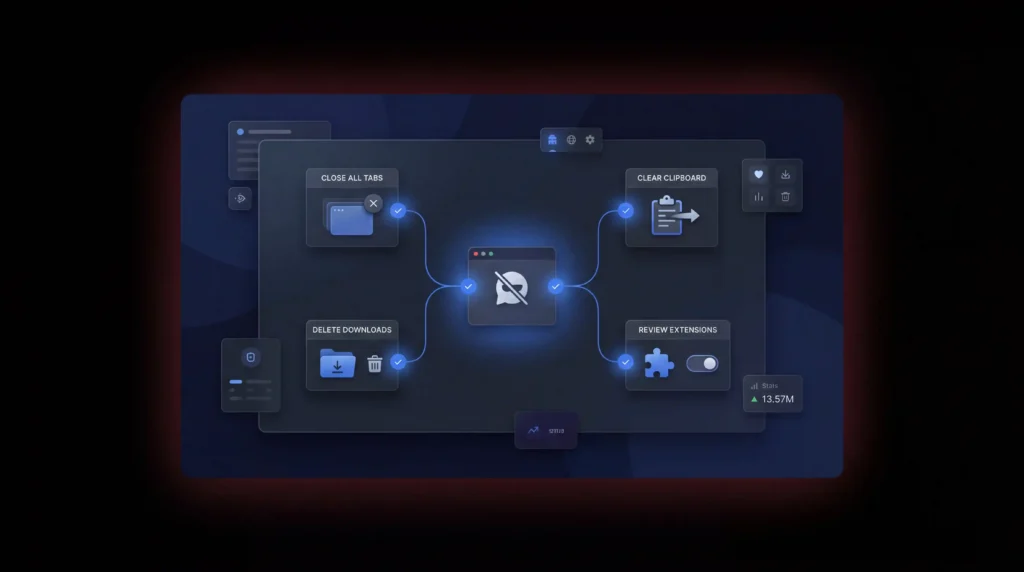
Private browsing isn’t truly “gone” until every private window or tab is closed. Leaving even one open keeps your session alive, which means someone else could reopen it and see where you left off. Exiting fully also means checking what’s left behind.
How to Stop Private Browsing (Desktop)?
Stopping a session safely means more than clicking the close button:
- Close every private window/tab: Even one open tab keeps your temporary session running.
- Check downloads: Files you saved don’t disappear with the window. Delete or move them if they’re sensitive.
- Clear clipboard content: Copied passwords, links, or text may remain until you overwrite or clear them.
- Watch sync accounts: If signed into Google, Apple ID, or Firefox Sync, bookmarks and actions may still sync outside private mode.
- Review extensions: Some add-ons force private windows or reopen them automatically.
Reminder: Stopping private browsing isn’t just about closing the “X.” It’s about shutting every door a private session leaves open.
How to Remove Private Browsing Mode (Mobile)?
Private browsing on phones often lives in separate tab groups. To return to normal browsing:
- Switch tab groups: Safari and Chrome mobile store private and normal tabs separately. Switch back to the standard group.
- Close the private group: Fully exit private mode by closing the group.
- Clear clipboard: Replace copied content if it includes sensitive info.
- Check third-party apps: Some apps or keyboards may still store copied text or links.
How to Turn Off Private Browsing (Disable Access)?
Not everyone wants private browsing available. Parents may prefer visibility into kids’ activity, and organizations often block it for compliance. While browsers don’t give a simple “off” switch, you can restrict it:
- Apple Screen Time: Block private browsing in Safari.
- Windows Family Safety: Disable InPrivate browsing.
- Firefox Settings: Advanced settings let you disable private mode.
- Workplace/School Policies: IT can block Incognito/InPrivate with group policies.
Why this matters: These blocks exist for safety, accountability, and transparency. If applied by an admin or parent, you won’t be able to turn private browsing back on yourself.
Private browsing stops at your device. NordVPN picks up where it leaves off, keeping your activity hidden from ISPs, networks, and trackers even after the window closes.
Now 68% off.
Nordvpn
Alternatives to Private Browsing
Not fully happy with private browsing? Here are better tools for stronger privacy and security:
Virtual Private Network (VPN)
The most powerful alternative to private browsing mode.
- A VPN hides your IP address and encrypts all traffic.
- Your ISP, workplace, and websites cannot easily track you.
- Even on public Wi-Fi, a VPN session keeps your data safe.
- A free VPN can work, but paid services give stronger security and faster speeds.
- Recommended VPNs: NordVPN, Surfshark and ExpressVPN. Avoid Opera’s weak built-in option.
- The best option for near-anonymous browsing.
- Action: Install a VPN client, choose servers in privacy-friendly regions, and keep it running during browsing.
Tor Browser
Routes your traffic through multiple encrypted relays worldwide.
- Makes tracking your activity almost impossible.
- Free to use, but browsing speed is usually slower.
- Best for high-privacy needs, not streaming or heavy sites.
- Action: Download Tor from its official site, avoid logging into accounts, and combine it with a VPN for stronger anonymity. Before you start, read our guide on whether Tor Browser is safe to understand the risks involved.
Ad-Blockers & Anti-Trackers
Stop websites and third parties from tracking your activity.
- Block intrusive ads and scripts across sites.
- Tools like uBlock Origin, Privacy Badger and ClearURLs prevent hidden tracking.
- Improves browsing privacy but doesn’t hide your IP.
- Action: Install uBlock Origin and enable advanced blocking for third-party scripts.
Privacy-Focused Browsers
Browsers are designed with security in mind.
- Brave: Blocks ads, trackers, and fingerprinting by default. Disable crypto features for cleaner use.
- Firefox: Enhanced Tracking Protection (Strict mode) plus add-ons like uBlock Origin.
- LibreWolf: Hardened Firefox with privacy defaults.
- Mullvad Browser: Built by a VPN provider, mimics Tor’s fingerprinting resistance.
- Iridium: Chromium-based with strong privacy tweaks.
- Action: Switch from Chrome/Edge to Brave or Firefox. Configure tracking protection to the strictest setting.
Secure Messaging Apps
Protect private conversations beyond emails and SMS.
- Use Signal for end-to-end encrypted chats.
- Telegram and WhatsApp also offer strong encryption, but Signal shares the least metadata.
- Prevents your conversations from being read by third parties.
- Action: Install Signal and set disappearing messages for sensitive chats.
Encrypted DNS (DoH/DoT)
- Encrypts domain lookups to hide browsing history from ISPs.
- Supported by Firefox, Brave, and Chrome.
- Providers like Cloudflare and NextDNS offer privacy-first DNS.
- Action: Enable DoH in browser settings and select a trusted provider.
Search Engines
- Mainstream search engines track searches, even in incognito.
- DuckDuckGo: Doesn’t log or store data.
- StartPage: Google results, no tracking.
- SearX: Community-driven, no data collection.
- Action: Set DuckDuckGo or StartPage as your browser’s default.
Password Managers and Security Hygiene
- Private browsing doesn’t save logins, but reusing passwords is unsafe.
- Use Bitwarden, 1Password, or Dashlane for encrypted password storage.
- Prevents data leaks and phishing risks.
- Even with tools, avoid suspicious links and downloads. Use an antivirus like Malwarebytes or Windows Defender for extra safety.
- Action: Store all accounts in a password manager, and enable Safe Browsing or AV protection.
Incognito hides activity only on your device. For true security, combine VPNs, Tor, ad-blockers, secure browsers, and encrypted messaging.
Together, they build a stronger shield against tracking.
What is Private Browsing: FAQs
The Bottom Line
Private browsing is helpful when you want quick, no-trace sessions that keep history, cookies, and logins off your device. It works well for shared computers, multiple logins, or light privacy needs.
However, it does not equate to anonymous internet browsing. Your ISP, employer, or websites can still track your activity, and it won’t protect you on public Wi-Fi. For stronger protection, a VPN for private browsing is the better choice, as it hides your IP address and encrypts your traffic.
Using both together offers the safest way to manage online private browsing.
Resources
- Google – Chrome Incognito mode & privacy details
https://support.google.com/chrome - Apple – Safari Private Browsing & device privacy settings
https://support.apple.com - Mozilla Foundation – Firefox Private Browsing & tracking protection
https://support.mozilla.org - Microsoft – Edge InPrivate browsing explanation
https://support.microsoft.com - Electronic Frontier Foundation – Online tracking & privacy education
https://www.eff.org - NordVPN – VPN for encrypting traffic and hiding IP address
https://nordvpn.com - Tor Browser – Anonymous browsing via an encrypted relay network
https://www.torproject.org